Our approach
See broadly. Intervene specifically.
People bring knowledge, experience, relationships, creativity, and care to the work they do. What they can accomplish depends on their individual abilities, how they work together, and the conditions surrounding them.
At Human Repair Workshop, we pay attention to all three.
Looking at all three helps us recognize what people are already able to do, understand what would help them accomplish more, and design support that fits their work.
A note from Brooke
Why relationships matter at work.
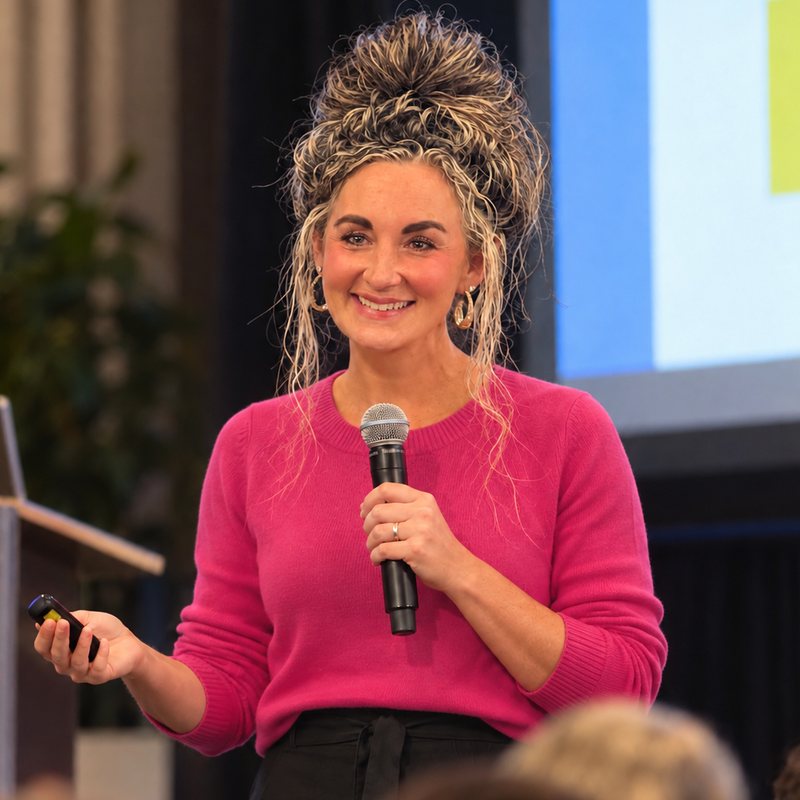
Brooke AlbertFounder
“There's this misconception that relationships matter at work because people need to feel good. That's not what we're saying.
Work that requires people requires relational capacity.
People have to be able to share information, raise concerns, disagree, make decisions, and repair when things go wrong.
You can have the right strategy, roles, processes, and tools. But if people can't do those things together, those systems aren't going to work the way they were designed to.”
How we look within, between, and around people.
The Ecology of Human Repair is a framework that helps us understand how people and their environments influence one another.
We use three connected perspectives:
Within people
What people know, feel, believe, experience, and are able to do.
Between people
What develops in relationships and shared work, including trust, communication, disagreement, and accountability.
Around people
The conditions surrounding people and relationships, such as resources, policies, leadership decisions, workload, roles, and organizational practices.
Looking at only one of these can leave something important out. For example, someone may know how to raise a concern while the organization's response to dissent makes speaking up risky.
How the three perspectives apply to a partnership.
Several organizations may want to improve access to services in their community. Each brings experienced staff, trusted relationships, and resources, and they agree on what they want to accomplish.
Agreeing on the goal still leaves open how they will work together.
Each perspective shows us something different about what that will take.
- Looking within, we learn what each person knows, what they can contribute, and where they want to grow.
- Looking between, we consider how the organizations will share information, make decisions, coordinate responsibilities, and maintain relationships.
- Looking around, we consider the funding, agreements, organizational expectations, and structures that will support their shared effort.
Together, the three perspectives show us where support would help the partnership most.
Partners make progress on a shared goal when they also develop the ability to work together.
How we work
Our approach guides how we design training, facilitate conversations, and support collective work. We design every engagement around its purpose and the people involved.
We talk with the people involved, learn what they want to accomplish, and explore what they already have to work with.
We ask questions, review relevant materials, and clarify what would make our time together useful.
We choose methods and activities that fit the situation.
That might mean creating opportunities to practice a skill, helping a group make decisions, developing shared agreements, or establishing ways to coordinate ongoing work.
We involve the people who will use what we create.
We lead the sessions, pay attention to what happens, and adjust when new information calls for it.
We help people capture what they've learned, use what they've developed, and identify what comes next.
We aim for people to keep using what they developed after the engagement ends.
Explore the thinking behind our work
Our frameworks and methods are available for anyone who wants to understand our approach in greater depth.
What Shapes People's Ability to Do Their Work
A way to understand the connections within, between, and around people.
Read the framework →Conditions for Impact™
A framework for considering the capacities and conditions that support work across individuals, teams, organizations, partnerships, communities, and systems.
Read the framework →How We Think Change Happens
Why we believe change becomes more possible when people and organizations can act on what matters, adapt when circumstances change, and sustain progress over time.
Read the Theory of Change →How We Approach Our Work
The practices that guide how we understand, design, facilitate, and learn from our work.
Read the Methodology →
Talk with us.
Tell us what you're trying to accomplish, and we can talk about how we might contribute.